Buy domainnameservice.org ?
We are moving the project
domainnameservice.org .
Are you interested in purchasing the domain
domainnameservice.org ?
domain@kv-gmbh.de · 0541-91531010
Buy domainnameservice.org ?
What is a glycosidic bond?
A glycosidic bond is a type of covalent bond that joins a carbohydrate molecule to another group, which can be another carbohydrate or a non-carbohydrate molecule. It is formed through a condensation reaction between the hydroxyl group of one molecule and the anomeric carbon of another molecule, resulting in the loss of a water molecule. Glycosidic bonds are important in the structure of carbohydrates, such as in forming disaccharides like sucrose or polysaccharides like starch. **
What is a glycosidic bond in sucrose?
A glycosidic bond in sucrose is a type of covalent bond that links the glucose and fructose molecules together. It is formed through a condensation reaction, where a molecule of water is removed to join the two sugar molecules. This bond is important for the structure and function of sucrose, as it holds the two sugar molecules together and allows for the storage and transport of energy in plants. **


Similar search terms for Glycosidic
Top-Angebote
Products related to Glycosidic:
-
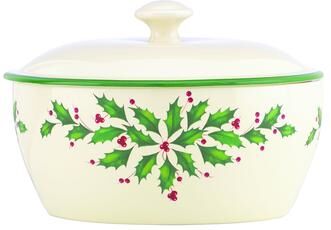
Lenox Hosting The Holidays Covered CasseroleThis Hosting the Holidays Casserole Dish is ideal for serving large dinner parties. Crafted of durable ivory porcelain, this spacious dish features a festive holly motif and comes with a matching lid.45,99 $*Shipping: 0,00 $Secure redirect to the provider
-
Lenox Hosting The Holidays Bread TrayWhether presenting an assortment of rolls or a buttery log of Texas toast, this festive ceramic Hosting the Holidays Bread Tray will not disappoint. The tray features a holly motif and is accented with 24-karat gold.44,49 $*Shipping: 0,00 $Secure redirect to the provider
-
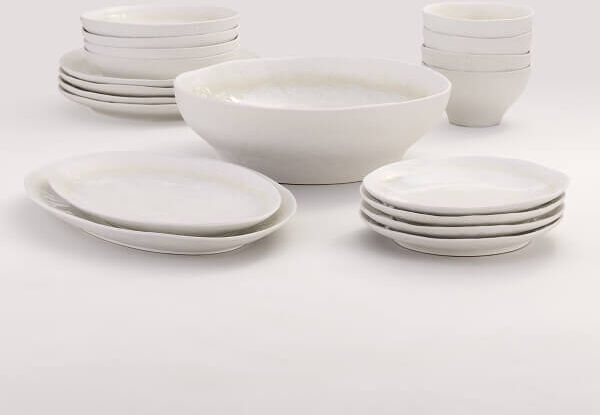
Stellar Stoneware Bantham Hosting For 4 SetIntroduce calm, contemporary style to your table with the Stellar Stoneware Bantham collection. Defined by smooth, modern contours and a soft green reactive glaze, each piece brings a fresh, artisan-inspired feel to everyday dining. Crafted from durable stoneware and fired for exceptional strength, the range offers excellent resistance to chipping and everyday wear. The naturally smooth glazed finish resists staining, cleans with ease, and provides a reassuringly balanced feel in hand. Its thick stoneware construction also enhances heat retention, helping dishes stay warmer for longer. Designed for modern living, every piece is microwave, dishwasher, and oven safe (up to 180°C), making the collection as practical as it is elegant—ideal for both daily use and relaxed entertaining. Set includes: 4 dinner plates, 4 side plates, 4x pasta bowls, 4 cereal bowls, 1x medium platter, 1x large platter and 1x serving bowl.199,95 £*Shipping: 0,00 £Secure redirect to the provider
-
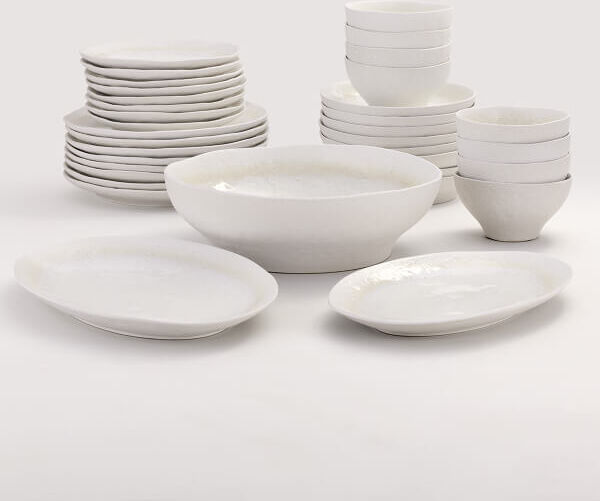
Stellar Stoneware Bantham Hosting For 8 SetIntroduce calm, contemporary style to your table with the Stellar Stoneware Bantham collection. Defined by smooth, modern contours and a soft green reactive glaze, each piece brings a fresh, artisan-inspired feel to everyday dining. Crafted from durable stoneware and fired for exceptional strength, the range offers excellent resistance to chipping and everyday wear. The naturally smooth glazed finish resists staining, cleans with ease, and provides a reassuringly balanced feel in hand. Its thick stoneware construction also enhances heat retention, helping dishes stay warmer for longer. Designed for modern living, every piece is microwave, dishwasher, and oven safe (up to 180°C), making the collection as practical as it is elegant—ideal for both daily use and relaxed entertaining. Set includes: 8 dinner plates, 8 side plates, 8x pasta bowls, 8 cereal bowls, 1x medium platter, 1x large platter and 1x serving bowl324,95 £*Shipping: 0,00 £Secure redirect to the provider


-
What is the glycosidic bond in sucrose?
The glycosidic bond in sucrose is a type of covalent bond that links the glucose and fructose molecules together. It is a specific type of linkage known as an alpha-1,2-glycosidic bond, which forms between the carbon-1 atom of glucose and the carbon-2 atom of fructose. This bond is responsible for the formation of the disaccharide sucrose, which is commonly known as table sugar. **
-
How to draw trehalose in a 2-11 glycosidic linkage?
To draw trehalose in a 2-11 glycosidic linkage, start by drawing two glucose molecules. Connect the first glucose molecule's carbon 2 to the second glucose molecule's carbon 1 with a glycosidic bond. This linkage represents the 2-1 glycosidic bond. Next, add another glucose molecule and connect its carbon 1 to the second glucose molecule's carbon 1 with a glycosidic bond. This linkage represents the 1-1 glycosidic bond. This structure represents trehalose in a 2-1,1 glycosidic linkage. **
-
Why is there a beta-1,4-glycosidic bond in lactose?
The beta-1,4-glycosidic bond in lactose is formed between the glucose and galactose molecules. This bond is important because it determines the structure and properties of lactose. The beta configuration of the glycosidic bond in lactose allows for the formation of a specific three-dimensional structure that is essential for its function as a disaccharide sugar found in milk. This bond also influences the way lactose is digested by the enzyme lactase in the human body. **
-
What are the differences between an ester bond and glycosidic formation?
An ester bond is formed when a carboxyl group of one molecule reacts with a hydroxyl group of another molecule, resulting in the formation of an ester and the release of water. This type of bond is commonly found in lipids and is important for energy storage. On the other hand, glycosidic formation involves the bonding of a sugar molecule to another molecule, typically another sugar or an alcohol, through the reaction between the anomeric carbon of the sugar and a hydroxyl group of the other molecule. This type of bond is important for the formation of carbohydrates and is commonly found in polysaccharides such as starch and cellulose. **
How do you draw trehalose in a 2-11 glycosidic linkage?
To draw trehalose in a 2-11 glycosidic linkage, start by drawing two glucose molecules connected by an alpha-1,1 glycosidic bond. Then, draw another glucose molecule connected to the first glucose molecule in the pair by an alpha-1,2 glycosidic bond. This creates the 2-11 glycosidic linkage in trehalose. The resulting structure should show three glucose molecules connected in a linear fashion with the 2-11 glycosidic linkage between the first and third glucose molecules. **
How do you draw trehalose in a 2-11 glycosidic bond?
To draw trehalose in a 2-11 glycosidic bond, you would first draw two glucose molecules connected by an alpha-1,1 glycosidic bond. Then, you would add another glucose molecule to the first glucose molecule in the 2 position, forming a 1,2 glycosidic bond. Finally, you would add the last glucose molecule to the second glucose molecule in the 1 position, forming a 2,1 glycosidic bond. This structure represents trehalose in a 2-11 glycosidic bond. **
Top-Angebote
Products related to Glycosidic:
-
Lenox Hosting The Holidays Covered CasseroleThis Hosting the Holidays Casserole Dish is ideal for serving large dinner parties. Crafted of durable ivory porcelain, this spacious dish features a festive holly motif and comes with a matching lid.45,99 $*Shipping: 0,00 $Secure redirect to the provider
-
Lenox Hosting The Holidays Bread TrayWhether presenting an assortment of rolls or a buttery log of Texas toast, this festive ceramic Hosting the Holidays Bread Tray will not disappoint. The tray features a holly motif and is accented with 24-karat gold.44,49 $*Shipping: 0,00 $Secure redirect to the provider
-
What is a glycosidic bond?
A glycosidic bond is a type of covalent bond that joins a carbohydrate molecule to another group, which can be another carbohydrate or a non-carbohydrate molecule. It is formed through a condensation reaction between the hydroxyl group of one molecule and the anomeric carbon of another molecule, resulting in the loss of a water molecule. Glycosidic bonds are important in the structure of carbohydrates, such as in forming disaccharides like sucrose or polysaccharides like starch. **
-
What is a glycosidic bond in sucrose?
A glycosidic bond in sucrose is a type of covalent bond that links the glucose and fructose molecules together. It is formed through a condensation reaction, where a molecule of water is removed to join the two sugar molecules. This bond is important for the structure and function of sucrose, as it holds the two sugar molecules together and allows for the storage and transport of energy in plants. **
-
What is the glycosidic bond in sucrose?
The glycosidic bond in sucrose is a type of covalent bond that links the glucose and fructose molecules together. It is a specific type of linkage known as an alpha-1,2-glycosidic bond, which forms between the carbon-1 atom of glucose and the carbon-2 atom of fructose. This bond is responsible for the formation of the disaccharide sucrose, which is commonly known as table sugar. **
-
How to draw trehalose in a 2-11 glycosidic linkage?
To draw trehalose in a 2-11 glycosidic linkage, start by drawing two glucose molecules. Connect the first glucose molecule's carbon 2 to the second glucose molecule's carbon 1 with a glycosidic bond. This linkage represents the 2-1 glycosidic bond. Next, add another glucose molecule and connect its carbon 1 to the second glucose molecule's carbon 1 with a glycosidic bond. This linkage represents the 1-1 glycosidic bond. This structure represents trehalose in a 2-1,1 glycosidic linkage. **
Similar search terms for Glycosidic
-
Stellar Stoneware Bantham Hosting For 4 SetIntroduce calm, contemporary style to your table with the Stellar Stoneware Bantham collection. Defined by smooth, modern contours and a soft green reactive glaze, each piece brings a fresh, artisan-inspired feel to everyday dining. Crafted from durable stoneware and fired for exceptional strength, the range offers excellent resistance to chipping and everyday wear. The naturally smooth glazed finish resists staining, cleans with ease, and provides a reassuringly balanced feel in hand. Its thick stoneware construction also enhances heat retention, helping dishes stay warmer for longer. Designed for modern living, every piece is microwave, dishwasher, and oven safe (up to 180°C), making the collection as practical as it is elegant—ideal for both daily use and relaxed entertaining. Set includes: 4 dinner plates, 4 side plates, 4x pasta bowls, 4 cereal bowls, 1x medium platter, 1x large platter and 1x serving bowl.199,95 £*Shipping: 0,00 £Secure redirect to the provider
-
Stellar Stoneware Bantham Hosting For 8 SetIntroduce calm, contemporary style to your table with the Stellar Stoneware Bantham collection. Defined by smooth, modern contours and a soft green reactive glaze, each piece brings a fresh, artisan-inspired feel to everyday dining. Crafted from durable stoneware and fired for exceptional strength, the range offers excellent resistance to chipping and everyday wear. The naturally smooth glazed finish resists staining, cleans with ease, and provides a reassuringly balanced feel in hand. Its thick stoneware construction also enhances heat retention, helping dishes stay warmer for longer. Designed for modern living, every piece is microwave, dishwasher, and oven safe (up to 180°C), making the collection as practical as it is elegant—ideal for both daily use and relaxed entertaining. Set includes: 8 dinner plates, 8 side plates, 8x pasta bowls, 8 cereal bowls, 1x medium platter, 1x large platter and 1x serving bowl324,95 £*Shipping: 0,00 £Secure redirect to the provider
-
Stellar Stoneware Mylor Hosting For 4 SetElevate everyday dining with the Stellar Stoneware Mylor collection, defined by its rich reactive glaze that gives each piece a subtly unique character. Blending warmth with understated style, Mylor brings a considered, artisanal touch to both casual meals and relaxed entertaining. Crafted from durable stoneware and fired for strength, each piece is designed to withstand daily use while maintaining its refined appearance. Plates and bowls are thoughtfully weighted for a balanced, comfortable feel in hand—offering reassuring sturdiness without compromising elegance. The thick stoneware construction also provides excellent heat retention, helping dishes stay warmer for longer. Designed for modern living, the collection is microwave and dishwasher safe, and suitable for oven use up to 180°C—ideal for everything from reheating to finishing dishes. Set includes: 4 dinner plates, 4 side plates, 4x pasta bowls, 4 cereal bowls, 1x medium platter, 1x large platter and 1x serving bowl.199,95 £*Shipping: 0,00 £Secure redirect to the provider
-
Stellar Stoneware Mylor Hosting For 8 SetElevate everyday dining with the Stellar Stoneware Mylor collection, defined by its rich reactive glaze that gives each piece a subtly unique character. Blending warmth with understated style, Mylor brings a considered, artisanal touch to both casual meals and relaxed entertaining. Crafted from durable stoneware and fired for strength, each piece is designed to withstand daily use while maintaining its refined appearance. Plates and bowls are thoughtfully weighted for a balanced, comfortable feel in hand—offering reassuring sturdiness without compromising elegance. The thick stoneware construction also provides excellent heat retention, helping dishes stay warmer for longer. Designed for modern living, the collection is microwave and dishwasher safe, and suitable for oven use up to 180°C—ideal for everything from reheating to finishing dishes. Set includes: 8 dinner plates, 8 side plates, 8x pasta bowls, 8 cereal bowls, 1x medium platter, 1x large platter and 1x serving bowl324,95 £*Shipping: 0,00 £Secure redirect to the provider
-
Why is there a beta-1,4-glycosidic bond in lactose?
The beta-1,4-glycosidic bond in lactose is formed between the glucose and galactose molecules. This bond is important because it determines the structure and properties of lactose. The beta configuration of the glycosidic bond in lactose allows for the formation of a specific three-dimensional structure that is essential for its function as a disaccharide sugar found in milk. This bond also influences the way lactose is digested by the enzyme lactase in the human body. **
-
What are the differences between an ester bond and glycosidic formation?
An ester bond is formed when a carboxyl group of one molecule reacts with a hydroxyl group of another molecule, resulting in the formation of an ester and the release of water. This type of bond is commonly found in lipids and is important for energy storage. On the other hand, glycosidic formation involves the bonding of a sugar molecule to another molecule, typically another sugar or an alcohol, through the reaction between the anomeric carbon of the sugar and a hydroxyl group of the other molecule. This type of bond is important for the formation of carbohydrates and is commonly found in polysaccharides such as starch and cellulose. **
-
How do you draw trehalose in a 2-11 glycosidic linkage?
To draw trehalose in a 2-11 glycosidic linkage, start by drawing two glucose molecules connected by an alpha-1,1 glycosidic bond. Then, draw another glucose molecule connected to the first glucose molecule in the pair by an alpha-1,2 glycosidic bond. This creates the 2-11 glycosidic linkage in trehalose. The resulting structure should show three glucose molecules connected in a linear fashion with the 2-11 glycosidic linkage between the first and third glucose molecules. **
-
How do you draw trehalose in a 2-11 glycosidic bond?
To draw trehalose in a 2-11 glycosidic bond, you would first draw two glucose molecules connected by an alpha-1,1 glycosidic bond. Then, you would add another glucose molecule to the first glucose molecule in the 2 position, forming a 1,2 glycosidic bond. Finally, you would add the last glucose molecule to the second glucose molecule in the 1 position, forming a 2,1 glycosidic bond. This structure represents trehalose in a 2-11 glycosidic bond. **
* All prices are inclusive of VAT and, if applicable, plus shipping costs. The offer information is based on the details provided by the respective shop and is updated through automated processes. Real-time updates do not occur, so deviations can occur in individual cases. ** Note: Parts of this content were created by AI.