Buy domainnameservice.org ?
We are moving the project
domainnameservice.org .
Are you interested in purchasing the domain
domainnameservice.org ?
domain@kv-gmbh.de · 0541-91531010
Buy domainnameservice.org ?
Can polynomials be normalized?
Yes, polynomials can be normalized by dividing each term by the leading coefficient. This process ensures that the leading coefficient of the polynomial is equal to 1, making it easier to compare and analyze different polynomials. Normalizing polynomials can also help simplify calculations and make it easier to identify important characteristics of the polynomial, such as its degree and leading term. **
How do you calculate polynomials?
To calculate polynomials, you first need to identify the terms of the polynomial, which are the individual parts separated by addition or subtraction. Then, you combine like terms by adding or subtracting the coefficients of the same variables raised to the same powers. Finally, you simplify the expression by combining any remaining like terms. If there are any exponents, you can use the rules of exponents to simplify further. **

Similar search terms for Polynomials
Top-Angebote
Products related to Polynomials:
-
Lenox Hosting The Holidays Bread TrayWhether presenting an assortment of rolls or a buttery log of Texas toast, this festive ceramic Hosting the Holidays Bread Tray will not disappoint. The tray features a holly motif and is accented with 24-karat gold.44,49 $*Shipping: 0,00 $Secure redirect to the provider
-
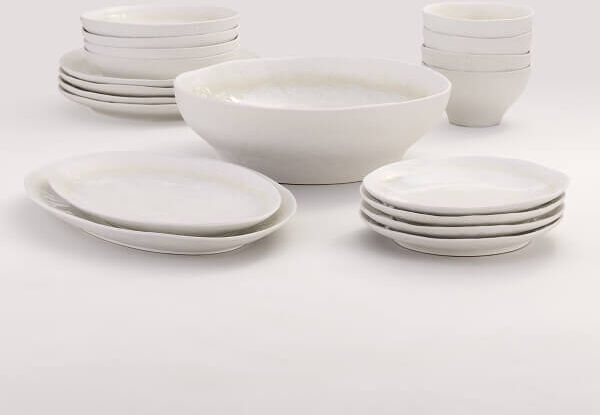
Stellar Stoneware Bantham Hosting For 4 SetIntroduce calm, contemporary style to your table with the Stellar Stoneware Bantham collection. Defined by smooth, modern contours and a soft green reactive glaze, each piece brings a fresh, artisan-inspired feel to everyday dining. Crafted from durable stoneware and fired for exceptional strength, the range offers excellent resistance to chipping and everyday wear. The naturally smooth glazed finish resists staining, cleans with ease, and provides a reassuringly balanced feel in hand. Its thick stoneware construction also enhances heat retention, helping dishes stay warmer for longer. Designed for modern living, every piece is microwave, dishwasher, and oven safe (up to 180°C), making the collection as practical as it is elegant—ideal for both daily use and relaxed entertaining. Set includes: 4 dinner plates, 4 side plates, 4x pasta bowls, 4 cereal bowls, 1x medium platter, 1x large platter and 1x serving bowl.199,95 £*Shipping: 0,00 £Secure redirect to the provider
-
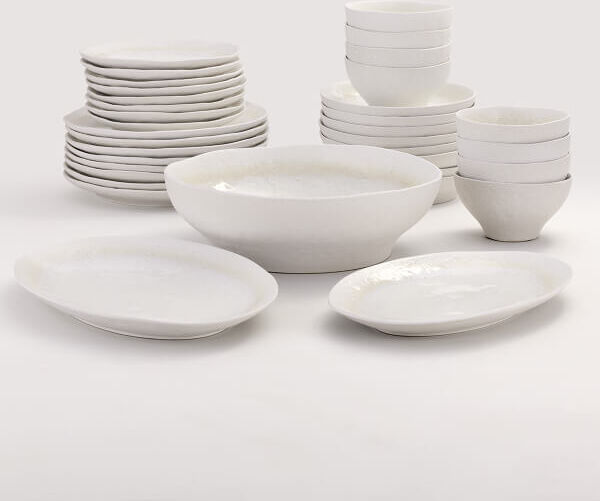
Stellar Stoneware Bantham Hosting For 8 SetIntroduce calm, contemporary style to your table with the Stellar Stoneware Bantham collection. Defined by smooth, modern contours and a soft green reactive glaze, each piece brings a fresh, artisan-inspired feel to everyday dining. Crafted from durable stoneware and fired for exceptional strength, the range offers excellent resistance to chipping and everyday wear. The naturally smooth glazed finish resists staining, cleans with ease, and provides a reassuringly balanced feel in hand. Its thick stoneware construction also enhances heat retention, helping dishes stay warmer for longer. Designed for modern living, every piece is microwave, dishwasher, and oven safe (up to 180°C), making the collection as practical as it is elegant—ideal for both daily use and relaxed entertaining. Set includes: 8 dinner plates, 8 side plates, 8x pasta bowls, 8 cereal bowls, 1x medium platter, 1x large platter and 1x serving bowl324,95 £*Shipping: 0,00 £Secure redirect to the provider


-
What is the reflection of polynomials?
The reflection of a polynomial is a transformation that flips the graph of the polynomial over a specified line, such as the x-axis or the y-axis. This transformation results in a mirror image of the original graph across the specified line. The reflection of a polynomial can be achieved by replacing x with -x in the polynomial function, which effectively reflects the graph across the y-axis. This transformation can help visualize the symmetry of the polynomial and its behavior across different axes. **
-
How does factoring third degree polynomials work?
Factoring third degree polynomials involves finding the roots of the polynomial, which are the values of x that make the polynomial equal to zero. Once the roots are found, the polynomial can be factored using the roots as factors. This process can be done using various methods such as the rational root theorem, synthetic division, or the factor theorem. By factoring the polynomial, we can express it as a product of linear and quadratic factors, making it easier to analyze and solve. **
-
How can one use complex numbers in polynomials?
Complex numbers can be used in polynomials as roots or solutions to the polynomial equation. For example, if a polynomial has complex roots, these can be used to factorize the polynomial into linear factors. Additionally, complex numbers can be used to solve higher degree polynomial equations using methods such as the Fundamental Theorem of Algebra and the Factor Theorem. Overall, complex numbers provide a way to extend the solutions of polynomial equations beyond just real numbers. **
-
Which polynomials have a value different from zero?
Polynomials with non-zero coefficients have values different from zero. A polynomial is a sum of terms, each of which is a constant multiplied by a variable raised to a non-negative integer power. If any of the coefficients in the polynomial are non-zero, then the polynomial will have a value different from zero for certain input values of the variable. **
Do polynomials with alternating signs only have positive roots?
No, polynomials with alternating signs do not necessarily have only positive roots. The signs of the roots of a polynomial depend on the degree and the specific coefficients of the polynomial. For example, a polynomial with alternating signs could have a mix of positive and negative roots, or it could have all positive or all negative roots. The signs of the roots are determined by the complex interplay of the coefficients and the degree of the polynomial. **
How to create polynomials that have no real roots?
One way to create polynomials that have no real roots is to have all the roots be complex numbers. This can be achieved by using quadratic polynomials with a negative discriminant, resulting in complex conjugate roots. Another method is to have the polynomial be of odd degree, as odd-degree polynomials always have at least one real root. Additionally, by using higher degree polynomials with carefully chosen coefficients, it is possible to ensure that all roots are complex. **
Top-Angebote
Products related to Polynomials:
-
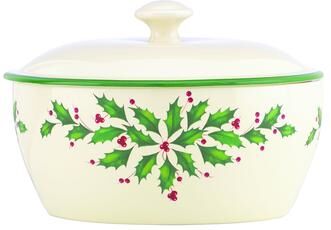
Lenox Hosting The Holidays Covered CasseroleThis Hosting the Holidays Casserole Dish is ideal for serving large dinner parties. Crafted of durable ivory porcelain, this spacious dish features a festive holly motif and comes with a matching lid.45,99 $*Shipping: 0,00 $Secure redirect to the provider
-
Lenox Hosting The Holidays Bread TrayWhether presenting an assortment of rolls or a buttery log of Texas toast, this festive ceramic Hosting the Holidays Bread Tray will not disappoint. The tray features a holly motif and is accented with 24-karat gold.44,49 $*Shipping: 0,00 $Secure redirect to the provider
-
Can polynomials be normalized?
Yes, polynomials can be normalized by dividing each term by the leading coefficient. This process ensures that the leading coefficient of the polynomial is equal to 1, making it easier to compare and analyze different polynomials. Normalizing polynomials can also help simplify calculations and make it easier to identify important characteristics of the polynomial, such as its degree and leading term. **
-
How do you calculate polynomials?
To calculate polynomials, you first need to identify the terms of the polynomial, which are the individual parts separated by addition or subtraction. Then, you combine like terms by adding or subtracting the coefficients of the same variables raised to the same powers. Finally, you simplify the expression by combining any remaining like terms. If there are any exponents, you can use the rules of exponents to simplify further. **
-
What is the reflection of polynomials?
The reflection of a polynomial is a transformation that flips the graph of the polynomial over a specified line, such as the x-axis or the y-axis. This transformation results in a mirror image of the original graph across the specified line. The reflection of a polynomial can be achieved by replacing x with -x in the polynomial function, which effectively reflects the graph across the y-axis. This transformation can help visualize the symmetry of the polynomial and its behavior across different axes. **
-
How does factoring third degree polynomials work?
Factoring third degree polynomials involves finding the roots of the polynomial, which are the values of x that make the polynomial equal to zero. Once the roots are found, the polynomial can be factored using the roots as factors. This process can be done using various methods such as the rational root theorem, synthetic division, or the factor theorem. By factoring the polynomial, we can express it as a product of linear and quadratic factors, making it easier to analyze and solve. **
Similar search terms for Polynomials
-
Stellar Stoneware Bantham Hosting For 4 SetIntroduce calm, contemporary style to your table with the Stellar Stoneware Bantham collection. Defined by smooth, modern contours and a soft green reactive glaze, each piece brings a fresh, artisan-inspired feel to everyday dining. Crafted from durable stoneware and fired for exceptional strength, the range offers excellent resistance to chipping and everyday wear. The naturally smooth glazed finish resists staining, cleans with ease, and provides a reassuringly balanced feel in hand. Its thick stoneware construction also enhances heat retention, helping dishes stay warmer for longer. Designed for modern living, every piece is microwave, dishwasher, and oven safe (up to 180°C), making the collection as practical as it is elegant—ideal for both daily use and relaxed entertaining. Set includes: 4 dinner plates, 4 side plates, 4x pasta bowls, 4 cereal bowls, 1x medium platter, 1x large platter and 1x serving bowl.199,95 £*Shipping: 0,00 £Secure redirect to the provider
-
Stellar Stoneware Bantham Hosting For 8 SetIntroduce calm, contemporary style to your table with the Stellar Stoneware Bantham collection. Defined by smooth, modern contours and a soft green reactive glaze, each piece brings a fresh, artisan-inspired feel to everyday dining. Crafted from durable stoneware and fired for exceptional strength, the range offers excellent resistance to chipping and everyday wear. The naturally smooth glazed finish resists staining, cleans with ease, and provides a reassuringly balanced feel in hand. Its thick stoneware construction also enhances heat retention, helping dishes stay warmer for longer. Designed for modern living, every piece is microwave, dishwasher, and oven safe (up to 180°C), making the collection as practical as it is elegant—ideal for both daily use and relaxed entertaining. Set includes: 8 dinner plates, 8 side plates, 8x pasta bowls, 8 cereal bowls, 1x medium platter, 1x large platter and 1x serving bowl324,95 £*Shipping: 0,00 £Secure redirect to the provider
-
Stellar Stoneware Mylor Hosting For 4 SetElevate everyday dining with the Stellar Stoneware Mylor collection, defined by its rich reactive glaze that gives each piece a subtly unique character. Blending warmth with understated style, Mylor brings a considered, artisanal touch to both casual meals and relaxed entertaining. Crafted from durable stoneware and fired for strength, each piece is designed to withstand daily use while maintaining its refined appearance. Plates and bowls are thoughtfully weighted for a balanced, comfortable feel in hand—offering reassuring sturdiness without compromising elegance. The thick stoneware construction also provides excellent heat retention, helping dishes stay warmer for longer. Designed for modern living, the collection is microwave and dishwasher safe, and suitable for oven use up to 180°C—ideal for everything from reheating to finishing dishes. Set includes: 4 dinner plates, 4 side plates, 4x pasta bowls, 4 cereal bowls, 1x medium platter, 1x large platter and 1x serving bowl.199,95 £*Shipping: 0,00 £Secure redirect to the provider
-
Stellar Stoneware Mylor Hosting For 8 SetElevate everyday dining with the Stellar Stoneware Mylor collection, defined by its rich reactive glaze that gives each piece a subtly unique character. Blending warmth with understated style, Mylor brings a considered, artisanal touch to both casual meals and relaxed entertaining. Crafted from durable stoneware and fired for strength, each piece is designed to withstand daily use while maintaining its refined appearance. Plates and bowls are thoughtfully weighted for a balanced, comfortable feel in hand—offering reassuring sturdiness without compromising elegance. The thick stoneware construction also provides excellent heat retention, helping dishes stay warmer for longer. Designed for modern living, the collection is microwave and dishwasher safe, and suitable for oven use up to 180°C—ideal for everything from reheating to finishing dishes. Set includes: 8 dinner plates, 8 side plates, 8x pasta bowls, 8 cereal bowls, 1x medium platter, 1x large platter and 1x serving bowl324,95 £*Shipping: 0,00 £Secure redirect to the provider
-
How can one use complex numbers in polynomials?
Complex numbers can be used in polynomials as roots or solutions to the polynomial equation. For example, if a polynomial has complex roots, these can be used to factorize the polynomial into linear factors. Additionally, complex numbers can be used to solve higher degree polynomial equations using methods such as the Fundamental Theorem of Algebra and the Factor Theorem. Overall, complex numbers provide a way to extend the solutions of polynomial equations beyond just real numbers. **
-
Which polynomials have a value different from zero?
Polynomials with non-zero coefficients have values different from zero. A polynomial is a sum of terms, each of which is a constant multiplied by a variable raised to a non-negative integer power. If any of the coefficients in the polynomial are non-zero, then the polynomial will have a value different from zero for certain input values of the variable. **
-
Do polynomials with alternating signs only have positive roots?
No, polynomials with alternating signs do not necessarily have only positive roots. The signs of the roots of a polynomial depend on the degree and the specific coefficients of the polynomial. For example, a polynomial with alternating signs could have a mix of positive and negative roots, or it could have all positive or all negative roots. The signs of the roots are determined by the complex interplay of the coefficients and the degree of the polynomial. **
-
How to create polynomials that have no real roots?
One way to create polynomials that have no real roots is to have all the roots be complex numbers. This can be achieved by using quadratic polynomials with a negative discriminant, resulting in complex conjugate roots. Another method is to have the polynomial be of odd degree, as odd-degree polynomials always have at least one real root. Additionally, by using higher degree polynomials with carefully chosen coefficients, it is possible to ensure that all roots are complex. **
* All prices are inclusive of VAT and, if applicable, plus shipping costs. The offer information is based on the details provided by the respective shop and is updated through automated processes. Real-time updates do not occur, so deviations can occur in individual cases. ** Note: Parts of this content were created by AI.