Buy domainnameservice.org ?
We are moving the project
domainnameservice.org .
Are you interested in purchasing the domain
domainnameservice.org ?
domain@kv-gmbh.de · 0541-91531010
Buy domainnameservice.org ?
What are loanwords?
Loanwords are words borrowed from one language and incorporated into another language. These words are often adapted to fit the phonological and grammatical rules of the borrowing language. Loanwords can come from a variety of sources, including trade, cultural exchange, and colonization, and they enrich a language by adding new vocabulary and reflecting the influence of other cultures. Examples of loanwords in English include "sushi" from Japanese, "piano" from Italian, and "ballet" from French. **
Which German loanwords are used in everyday life?
Some common German loanwords used in everyday life include "kindergarten," "angst," "delicatessen," "zeitgeist," and "wanderlust." These words have been adopted into English due to their specific meanings or lack of direct English equivalents. Additionally, words like "schadenfreude," "blitz," and "gesundheit" are also commonly used in English, reflecting the influence of German language and culture on everyday life. **

Similar search terms for Loanwords
Top-Angebote
Products related to Loanwords:
-
Lenox Hosting The Holidays Bread TrayWhether presenting an assortment of rolls or a buttery log of Texas toast, this festive ceramic Hosting the Holidays Bread Tray will not disappoint. The tray features a holly motif and is accented with 24-karat gold.44,49 $*Shipping: 0,00 $Secure redirect to the provider
-
Stellar Stoneware Bantham Hosting For 4 SetIntroduce calm, contemporary style to your table with the Stellar Stoneware Bantham collection. Defined by smooth, modern contours and a soft green reactive glaze, each piece brings a fresh, artisan-inspired feel to everyday dining. Crafted from durable stoneware and fired for exceptional strength, the range offers excellent resistance to chipping and everyday wear. The naturally smooth glazed finish resists staining, cleans with ease, and provides a reassuringly balanced feel in hand. Its thick stoneware construction also enhances heat retention, helping dishes stay warmer for longer. Designed for modern living, every piece is microwave, dishwasher, and oven safe (up to 180°C), making the collection as practical as it is elegant—ideal for both daily use and relaxed entertaining. Set includes: 4 dinner plates, 4 side plates, 4x pasta bowls, 4 cereal bowls, 1x medium platter, 1x large platter and 1x serving bowl.199,95 £*Shipping: 0,00 £Secure redirect to the provider
-
Stellar Stoneware Bantham Hosting For 8 SetIntroduce calm, contemporary style to your table with the Stellar Stoneware Bantham collection. Defined by smooth, modern contours and a soft green reactive glaze, each piece brings a fresh, artisan-inspired feel to everyday dining. Crafted from durable stoneware and fired for exceptional strength, the range offers excellent resistance to chipping and everyday wear. The naturally smooth glazed finish resists staining, cleans with ease, and provides a reassuringly balanced feel in hand. Its thick stoneware construction also enhances heat retention, helping dishes stay warmer for longer. Designed for modern living, every piece is microwave, dishwasher, and oven safe (up to 180°C), making the collection as practical as it is elegant—ideal for both daily use and relaxed entertaining. Set includes: 8 dinner plates, 8 side plates, 8x pasta bowls, 8 cereal bowls, 1x medium platter, 1x large platter and 1x serving bowl324,95 £*Shipping: 0,00 £Secure redirect to the provider


-
How can one recognize Latin and French loanwords?
One can recognize Latin loanwords by looking for words that have a Latin origin, such as words related to law, science, and medicine. These words often have prefixes or suffixes that are common in Latin, such as "bi-" or "-ology." French loanwords, on the other hand, can be recognized by their pronunciation and spelling, as they often have silent letters or accents. Additionally, French loanwords are commonly found in the fields of fashion, cuisine, and the arts. **
-
What percentage of the German language consists of loanwords?
Approximately 5-6% of the German language consists of loanwords. These loanwords come from various languages, including English, French, Latin, and Greek. The influence of these loanwords reflects the historical and cultural interactions between Germany and other countries. While the majority of the German language is of Germanic origin, the presence of loanwords adds diversity and richness to the language. **
-
Which loanwords used in German originate from other languages?
German has borrowed loanwords from various languages, including English, French, and Latin. Some loanwords from English include "Computer," "Handy" (mobile phone), and "Job." From French, German has borrowed words like "Restaurant," "Boulevard," and "Café." Latin loanwords in German include terms like "Universität," "Kultur," and "Information." These loanwords have enriched the German language and reflect its history of cultural exchange with other countries. **
-
What are some examples of loanwords in the German language?
Some examples of loanwords in the German language include "Computer," "Internet," and "Handy" (meaning mobile phone), which are borrowed from English. "Café" and "Restaurant" are loanwords from French, while "Schokolade" (chocolate) and "Tomate" (tomato) are borrowed from Spanish. Additionally, "Kindergarten" and "Rucksack" are loanwords from German into English and then back into German. These loanwords reflect the influence of other languages on the German vocabulary. **
What are the differences between inherited words, loanwords, and foreign words?
Inherited words are words that have been passed down through generations within a language and are considered native to that language. Loanwords are words borrowed from another language and integrated into the borrowing language with little to no modification. Foreign words are words that come from another language and are used in their original form without being fully integrated into the borrowing language. Each type of word has a different level of integration and history within the language it is used in. **
What are the differences between native words, loanwords, and foreign words?
Native words are words that originate from the language itself, while loanwords are words borrowed from another language and incorporated into the native language. Foreign words are words that come from another language but are not fully integrated into the native language. Native words are usually easier to pronounce and understand for native speakers, while loanwords and foreign words may have different pronunciations and meanings that need to be learned. **
Top-Angebote
Products related to Loanwords:
-
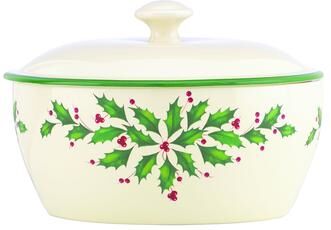
Lenox Hosting The Holidays Covered CasseroleThis Hosting the Holidays Casserole Dish is ideal for serving large dinner parties. Crafted of durable ivory porcelain, this spacious dish features a festive holly motif and comes with a matching lid.45,99 $*Shipping: 0,00 $Secure redirect to the provider
-
Lenox Hosting The Holidays Bread TrayWhether presenting an assortment of rolls or a buttery log of Texas toast, this festive ceramic Hosting the Holidays Bread Tray will not disappoint. The tray features a holly motif and is accented with 24-karat gold.44,49 $*Shipping: 0,00 $Secure redirect to the provider
-
What are loanwords?
Loanwords are words borrowed from one language and incorporated into another language. These words are often adapted to fit the phonological and grammatical rules of the borrowing language. Loanwords can come from a variety of sources, including trade, cultural exchange, and colonization, and they enrich a language by adding new vocabulary and reflecting the influence of other cultures. Examples of loanwords in English include "sushi" from Japanese, "piano" from Italian, and "ballet" from French. **
-
Which German loanwords are used in everyday life?
Some common German loanwords used in everyday life include "kindergarten," "angst," "delicatessen," "zeitgeist," and "wanderlust." These words have been adopted into English due to their specific meanings or lack of direct English equivalents. Additionally, words like "schadenfreude," "blitz," and "gesundheit" are also commonly used in English, reflecting the influence of German language and culture on everyday life. **
-
How can one recognize Latin and French loanwords?
One can recognize Latin loanwords by looking for words that have a Latin origin, such as words related to law, science, and medicine. These words often have prefixes or suffixes that are common in Latin, such as "bi-" or "-ology." French loanwords, on the other hand, can be recognized by their pronunciation and spelling, as they often have silent letters or accents. Additionally, French loanwords are commonly found in the fields of fashion, cuisine, and the arts. **
-
What percentage of the German language consists of loanwords?
Approximately 5-6% of the German language consists of loanwords. These loanwords come from various languages, including English, French, Latin, and Greek. The influence of these loanwords reflects the historical and cultural interactions between Germany and other countries. While the majority of the German language is of Germanic origin, the presence of loanwords adds diversity and richness to the language. **
Similar search terms for Loanwords
-
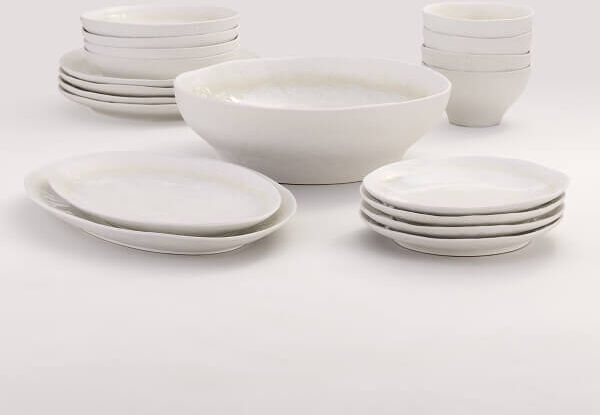
Stellar Stoneware Bantham Hosting For 4 SetIntroduce calm, contemporary style to your table with the Stellar Stoneware Bantham collection. Defined by smooth, modern contours and a soft green reactive glaze, each piece brings a fresh, artisan-inspired feel to everyday dining. Crafted from durable stoneware and fired for exceptional strength, the range offers excellent resistance to chipping and everyday wear. The naturally smooth glazed finish resists staining, cleans with ease, and provides a reassuringly balanced feel in hand. Its thick stoneware construction also enhances heat retention, helping dishes stay warmer for longer. Designed for modern living, every piece is microwave, dishwasher, and oven safe (up to 180°C), making the collection as practical as it is elegant—ideal for both daily use and relaxed entertaining. Set includes: 4 dinner plates, 4 side plates, 4x pasta bowls, 4 cereal bowls, 1x medium platter, 1x large platter and 1x serving bowl.199,95 £*Shipping: 0,00 £Secure redirect to the provider
-
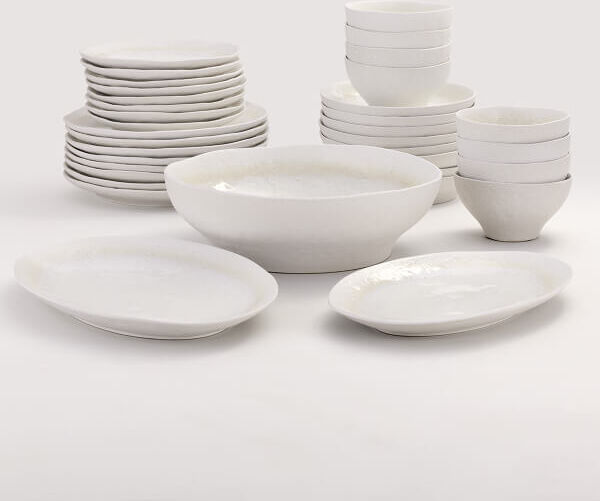
Stellar Stoneware Bantham Hosting For 8 SetIntroduce calm, contemporary style to your table with the Stellar Stoneware Bantham collection. Defined by smooth, modern contours and a soft green reactive glaze, each piece brings a fresh, artisan-inspired feel to everyday dining. Crafted from durable stoneware and fired for exceptional strength, the range offers excellent resistance to chipping and everyday wear. The naturally smooth glazed finish resists staining, cleans with ease, and provides a reassuringly balanced feel in hand. Its thick stoneware construction also enhances heat retention, helping dishes stay warmer for longer. Designed for modern living, every piece is microwave, dishwasher, and oven safe (up to 180°C), making the collection as practical as it is elegant—ideal for both daily use and relaxed entertaining. Set includes: 8 dinner plates, 8 side plates, 8x pasta bowls, 8 cereal bowls, 1x medium platter, 1x large platter and 1x serving bowl324,95 £*Shipping: 0,00 £Secure redirect to the provider
-
Stellar Stoneware Mylor Hosting For 4 SetElevate everyday dining with the Stellar Stoneware Mylor collection, defined by its rich reactive glaze that gives each piece a subtly unique character. Blending warmth with understated style, Mylor brings a considered, artisanal touch to both casual meals and relaxed entertaining. Crafted from durable stoneware and fired for strength, each piece is designed to withstand daily use while maintaining its refined appearance. Plates and bowls are thoughtfully weighted for a balanced, comfortable feel in hand—offering reassuring sturdiness without compromising elegance. The thick stoneware construction also provides excellent heat retention, helping dishes stay warmer for longer. Designed for modern living, the collection is microwave and dishwasher safe, and suitable for oven use up to 180°C—ideal for everything from reheating to finishing dishes. Set includes: 4 dinner plates, 4 side plates, 4x pasta bowls, 4 cereal bowls, 1x medium platter, 1x large platter and 1x serving bowl.199,95 £*Shipping: 0,00 £Secure redirect to the provider
-
Stellar Stoneware Mylor Hosting For 8 SetElevate everyday dining with the Stellar Stoneware Mylor collection, defined by its rich reactive glaze that gives each piece a subtly unique character. Blending warmth with understated style, Mylor brings a considered, artisanal touch to both casual meals and relaxed entertaining. Crafted from durable stoneware and fired for strength, each piece is designed to withstand daily use while maintaining its refined appearance. Plates and bowls are thoughtfully weighted for a balanced, comfortable feel in hand—offering reassuring sturdiness without compromising elegance. The thick stoneware construction also provides excellent heat retention, helping dishes stay warmer for longer. Designed for modern living, the collection is microwave and dishwasher safe, and suitable for oven use up to 180°C—ideal for everything from reheating to finishing dishes. Set includes: 8 dinner plates, 8 side plates, 8x pasta bowls, 8 cereal bowls, 1x medium platter, 1x large platter and 1x serving bowl324,95 £*Shipping: 0,00 £Secure redirect to the provider
-
Which loanwords used in German originate from other languages?
German has borrowed loanwords from various languages, including English, French, and Latin. Some loanwords from English include "Computer," "Handy" (mobile phone), and "Job." From French, German has borrowed words like "Restaurant," "Boulevard," and "Café." Latin loanwords in German include terms like "Universität," "Kultur," and "Information." These loanwords have enriched the German language and reflect its history of cultural exchange with other countries. **
-
What are some examples of loanwords in the German language?
Some examples of loanwords in the German language include "Computer," "Internet," and "Handy" (meaning mobile phone), which are borrowed from English. "Café" and "Restaurant" are loanwords from French, while "Schokolade" (chocolate) and "Tomate" (tomato) are borrowed from Spanish. Additionally, "Kindergarten" and "Rucksack" are loanwords from German into English and then back into German. These loanwords reflect the influence of other languages on the German vocabulary. **
-
What are the differences between inherited words, loanwords, and foreign words?
Inherited words are words that have been passed down through generations within a language and are considered native to that language. Loanwords are words borrowed from another language and integrated into the borrowing language with little to no modification. Foreign words are words that come from another language and are used in their original form without being fully integrated into the borrowing language. Each type of word has a different level of integration and history within the language it is used in. **
-
What are the differences between native words, loanwords, and foreign words?
Native words are words that originate from the language itself, while loanwords are words borrowed from another language and incorporated into the native language. Foreign words are words that come from another language but are not fully integrated into the native language. Native words are usually easier to pronounce and understand for native speakers, while loanwords and foreign words may have different pronunciations and meanings that need to be learned. **
* All prices are inclusive of VAT and, if applicable, plus shipping costs. The offer information is based on the details provided by the respective shop and is updated through automated processes. Real-time updates do not occur, so deviations can occur in individual cases. ** Note: Parts of this content were created by AI.