Buy domainnameservice.org ?
We are moving the project
domainnameservice.org .
Are you interested in purchasing the domain
domainnameservice.org ?
domain@kv-gmbh.de · 0541-91531010
Buy domainnameservice.org ?
What are T-V diagrams and T-A diagrams?
T-V diagrams, also known as temperature-volume diagrams, are graphical representations that show the relationship between the temperature and volume of a substance. They are commonly used in thermodynamics to analyze the behavior of gases during different processes. T-A diagrams, on the other hand, represent the relationship between temperature and entropy of a substance. These diagrams are useful in studying the changes in entropy that occur during various thermodynamic processes. Both T-V and T-A diagrams are valuable tools in understanding the thermodynamic properties of substances and analyzing their behavior under different conditions. **
How are class diagrams, object diagrams, methods, and attributes represented?
Class diagrams represent the structure of a system by showing classes, their attributes, and methods. Object diagrams show instances of classes and their relationships at a specific point in time. Methods are represented in class diagrams as operations within a class, while attributes are shown as variables within a class. Object diagrams display the current state of objects, including their attributes and values. **

Similar search terms for Diagrams
Top-Angebote
Products related to Diagrams:
-
Lenox Hosting The Holidays Bread TrayWhether presenting an assortment of rolls or a buttery log of Texas toast, this festive ceramic Hosting the Holidays Bread Tray will not disappoint. The tray features a holly motif and is accented with 24-karat gold.44,49 $*Shipping: 0,00 $Secure redirect to the provider
-
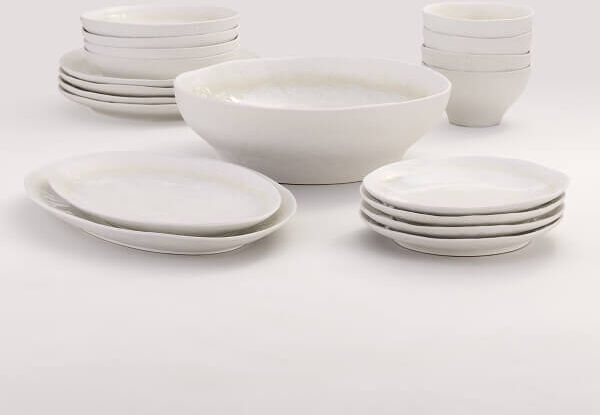
Stellar Stoneware Bantham Hosting For 4 SetIntroduce calm, contemporary style to your table with the Stellar Stoneware Bantham collection. Defined by smooth, modern contours and a soft green reactive glaze, each piece brings a fresh, artisan-inspired feel to everyday dining. Crafted from durable stoneware and fired for exceptional strength, the range offers excellent resistance to chipping and everyday wear. The naturally smooth glazed finish resists staining, cleans with ease, and provides a reassuringly balanced feel in hand. Its thick stoneware construction also enhances heat retention, helping dishes stay warmer for longer. Designed for modern living, every piece is microwave, dishwasher, and oven safe (up to 180°C), making the collection as practical as it is elegant—ideal for both daily use and relaxed entertaining. Set includes: 4 dinner plates, 4 side plates, 4x pasta bowls, 4 cereal bowls, 1x medium platter, 1x large platter and 1x serving bowl.199,95 £*Shipping: 0,00 £Secure redirect to the provider
-
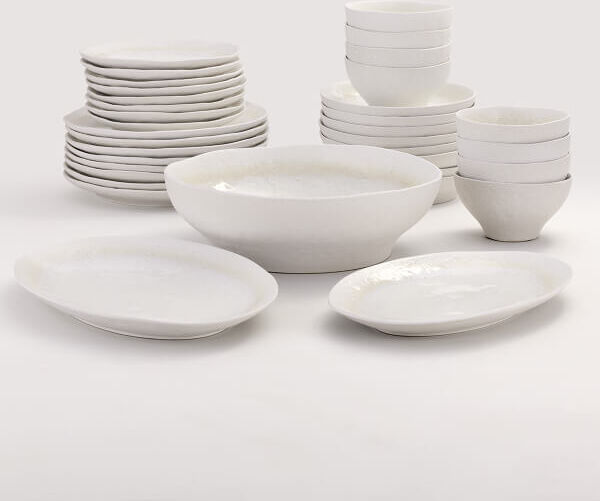
Stellar Stoneware Bantham Hosting For 8 SetIntroduce calm, contemporary style to your table with the Stellar Stoneware Bantham collection. Defined by smooth, modern contours and a soft green reactive glaze, each piece brings a fresh, artisan-inspired feel to everyday dining. Crafted from durable stoneware and fired for exceptional strength, the range offers excellent resistance to chipping and everyday wear. The naturally smooth glazed finish resists staining, cleans with ease, and provides a reassuringly balanced feel in hand. Its thick stoneware construction also enhances heat retention, helping dishes stay warmer for longer. Designed for modern living, every piece is microwave, dishwasher, and oven safe (up to 180°C), making the collection as practical as it is elegant—ideal for both daily use and relaxed entertaining. Set includes: 8 dinner plates, 8 side plates, 8x pasta bowls, 8 cereal bowls, 1x medium platter, 1x large platter and 1x serving bowl324,95 £*Shipping: 0,00 £Secure redirect to the provider


-
How are diagrams described?
Diagrams are described by providing a detailed explanation of the elements, relationships, and connections within the diagram. This includes identifying key components, describing their functions, and explaining how they interact with each other. Additionally, the overall purpose and significance of the diagram should be highlighted to give context to the description. Visual cues, such as shapes, colors, and labels, may also be referenced to enhance the understanding of the diagram. **
-
What types of electrical engineering terminal diagrams and circuit diagrams are there?
There are two main types of electrical engineering diagrams: terminal diagrams and circuit diagrams. Terminal diagrams show the physical layout of components and their connections, typically used for wiring and installation purposes. Circuit diagrams, on the other hand, illustrate the electrical connections between components and are used to design, analyze, and troubleshoot circuits. Both types of diagrams are essential tools for electrical engineers to understand and work with complex electrical systems. **
-
How do you interpret diagrams?
I interpret diagrams by first identifying the key components and relationships represented in the diagram. I then analyze the visual elements such as shapes, colors, and labels to understand the information being conveyed. I also pay attention to the overall structure and layout of the diagram to grasp the flow of information. Finally, I use the diagram to help me visualize complex concepts and make connections between different pieces of information. **
-
How to create tree diagrams?
To create a tree diagram, start by identifying the main topic or idea that you want to represent at the top of the diagram. Then, branch out from the main topic with lines to represent subtopics or related ideas. Each subtopic can then have its own branches for further subtopics or details. Use clear and concise labels for each branch to keep the diagram organized and easy to understand. You can create tree diagrams by hand on paper or using software tools such as Microsoft Word, PowerPoint, or specialized diagramming software. **
How do tree diagrams work?
Tree diagrams are visual tools used to show the different possible outcomes of a decision or event. They start with a single node, representing the initial decision or event, and then branch out into different paths, each representing a different possible outcome. Each branch then further branches out into more paths, showing the different possible outcomes at each stage. This allows for a clear and organized representation of all the possible combinations of outcomes, making it easier to analyze and make decisions based on the probabilities of each outcome. **
How to create database diagrams?
To create a database diagram, you can use a database management tool such as Microsoft SQL Server Management Studio or MySQL Workbench. These tools allow you to visually design and create database diagrams by dragging and dropping tables, defining relationships between them, and adding attributes. You can also generate a database diagram from an existing database by reverse engineering it. Once the diagram is created, you can use it to visualize the structure of your database, understand the relationships between tables, and communicate the database design to others. **
Top-Angebote
Products related to Diagrams:
-
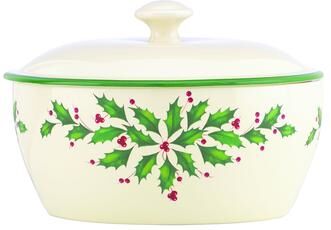
Lenox Hosting The Holidays Covered CasseroleThis Hosting the Holidays Casserole Dish is ideal for serving large dinner parties. Crafted of durable ivory porcelain, this spacious dish features a festive holly motif and comes with a matching lid.45,99 $*Shipping: 0,00 $Secure redirect to the provider
-
Lenox Hosting The Holidays Bread TrayWhether presenting an assortment of rolls or a buttery log of Texas toast, this festive ceramic Hosting the Holidays Bread Tray will not disappoint. The tray features a holly motif and is accented with 24-karat gold.44,49 $*Shipping: 0,00 $Secure redirect to the provider
-
What are T-V diagrams and T-A diagrams?
T-V diagrams, also known as temperature-volume diagrams, are graphical representations that show the relationship between the temperature and volume of a substance. They are commonly used in thermodynamics to analyze the behavior of gases during different processes. T-A diagrams, on the other hand, represent the relationship between temperature and entropy of a substance. These diagrams are useful in studying the changes in entropy that occur during various thermodynamic processes. Both T-V and T-A diagrams are valuable tools in understanding the thermodynamic properties of substances and analyzing their behavior under different conditions. **
-
How are class diagrams, object diagrams, methods, and attributes represented?
Class diagrams represent the structure of a system by showing classes, their attributes, and methods. Object diagrams show instances of classes and their relationships at a specific point in time. Methods are represented in class diagrams as operations within a class, while attributes are shown as variables within a class. Object diagrams display the current state of objects, including their attributes and values. **
-
How are diagrams described?
Diagrams are described by providing a detailed explanation of the elements, relationships, and connections within the diagram. This includes identifying key components, describing their functions, and explaining how they interact with each other. Additionally, the overall purpose and significance of the diagram should be highlighted to give context to the description. Visual cues, such as shapes, colors, and labels, may also be referenced to enhance the understanding of the diagram. **
-
What types of electrical engineering terminal diagrams and circuit diagrams are there?
There are two main types of electrical engineering diagrams: terminal diagrams and circuit diagrams. Terminal diagrams show the physical layout of components and their connections, typically used for wiring and installation purposes. Circuit diagrams, on the other hand, illustrate the electrical connections between components and are used to design, analyze, and troubleshoot circuits. Both types of diagrams are essential tools for electrical engineers to understand and work with complex electrical systems. **
Similar search terms for Diagrams
-
Stellar Stoneware Bantham Hosting For 4 SetIntroduce calm, contemporary style to your table with the Stellar Stoneware Bantham collection. Defined by smooth, modern contours and a soft green reactive glaze, each piece brings a fresh, artisan-inspired feel to everyday dining. Crafted from durable stoneware and fired for exceptional strength, the range offers excellent resistance to chipping and everyday wear. The naturally smooth glazed finish resists staining, cleans with ease, and provides a reassuringly balanced feel in hand. Its thick stoneware construction also enhances heat retention, helping dishes stay warmer for longer. Designed for modern living, every piece is microwave, dishwasher, and oven safe (up to 180°C), making the collection as practical as it is elegant—ideal for both daily use and relaxed entertaining. Set includes: 4 dinner plates, 4 side plates, 4x pasta bowls, 4 cereal bowls, 1x medium platter, 1x large platter and 1x serving bowl.199,95 £*Shipping: 0,00 £Secure redirect to the provider
-
Stellar Stoneware Bantham Hosting For 8 SetIntroduce calm, contemporary style to your table with the Stellar Stoneware Bantham collection. Defined by smooth, modern contours and a soft green reactive glaze, each piece brings a fresh, artisan-inspired feel to everyday dining. Crafted from durable stoneware and fired for exceptional strength, the range offers excellent resistance to chipping and everyday wear. The naturally smooth glazed finish resists staining, cleans with ease, and provides a reassuringly balanced feel in hand. Its thick stoneware construction also enhances heat retention, helping dishes stay warmer for longer. Designed for modern living, every piece is microwave, dishwasher, and oven safe (up to 180°C), making the collection as practical as it is elegant—ideal for both daily use and relaxed entertaining. Set includes: 8 dinner plates, 8 side plates, 8x pasta bowls, 8 cereal bowls, 1x medium platter, 1x large platter and 1x serving bowl324,95 £*Shipping: 0,00 £Secure redirect to the provider
-
Stellar Stoneware Mylor Hosting For 4 SetElevate everyday dining with the Stellar Stoneware Mylor collection, defined by its rich reactive glaze that gives each piece a subtly unique character. Blending warmth with understated style, Mylor brings a considered, artisanal touch to both casual meals and relaxed entertaining. Crafted from durable stoneware and fired for strength, each piece is designed to withstand daily use while maintaining its refined appearance. Plates and bowls are thoughtfully weighted for a balanced, comfortable feel in hand—offering reassuring sturdiness without compromising elegance. The thick stoneware construction also provides excellent heat retention, helping dishes stay warmer for longer. Designed for modern living, the collection is microwave and dishwasher safe, and suitable for oven use up to 180°C—ideal for everything from reheating to finishing dishes. Set includes: 4 dinner plates, 4 side plates, 4x pasta bowls, 4 cereal bowls, 1x medium platter, 1x large platter and 1x serving bowl.199,95 £*Shipping: 0,00 £Secure redirect to the provider
-
Stellar Stoneware Mylor Hosting For 8 SetElevate everyday dining with the Stellar Stoneware Mylor collection, defined by its rich reactive glaze that gives each piece a subtly unique character. Blending warmth with understated style, Mylor brings a considered, artisanal touch to both casual meals and relaxed entertaining. Crafted from durable stoneware and fired for strength, each piece is designed to withstand daily use while maintaining its refined appearance. Plates and bowls are thoughtfully weighted for a balanced, comfortable feel in hand—offering reassuring sturdiness without compromising elegance. The thick stoneware construction also provides excellent heat retention, helping dishes stay warmer for longer. Designed for modern living, the collection is microwave and dishwasher safe, and suitable for oven use up to 180°C—ideal for everything from reheating to finishing dishes. Set includes: 8 dinner plates, 8 side plates, 8x pasta bowls, 8 cereal bowls, 1x medium platter, 1x large platter and 1x serving bowl324,95 £*Shipping: 0,00 £Secure redirect to the provider
-
How do you interpret diagrams?
I interpret diagrams by first identifying the key components and relationships represented in the diagram. I then analyze the visual elements such as shapes, colors, and labels to understand the information being conveyed. I also pay attention to the overall structure and layout of the diagram to grasp the flow of information. Finally, I use the diagram to help me visualize complex concepts and make connections between different pieces of information. **
-
How to create tree diagrams?
To create a tree diagram, start by identifying the main topic or idea that you want to represent at the top of the diagram. Then, branch out from the main topic with lines to represent subtopics or related ideas. Each subtopic can then have its own branches for further subtopics or details. Use clear and concise labels for each branch to keep the diagram organized and easy to understand. You can create tree diagrams by hand on paper or using software tools such as Microsoft Word, PowerPoint, or specialized diagramming software. **
-
How do tree diagrams work?
Tree diagrams are visual tools used to show the different possible outcomes of a decision or event. They start with a single node, representing the initial decision or event, and then branch out into different paths, each representing a different possible outcome. Each branch then further branches out into more paths, showing the different possible outcomes at each stage. This allows for a clear and organized representation of all the possible combinations of outcomes, making it easier to analyze and make decisions based on the probabilities of each outcome. **
-
How to create database diagrams?
To create a database diagram, you can use a database management tool such as Microsoft SQL Server Management Studio or MySQL Workbench. These tools allow you to visually design and create database diagrams by dragging and dropping tables, defining relationships between them, and adding attributes. You can also generate a database diagram from an existing database by reverse engineering it. Once the diagram is created, you can use it to visualize the structure of your database, understand the relationships between tables, and communicate the database design to others. **
* All prices are inclusive of VAT and, if applicable, plus shipping costs. The offer information is based on the details provided by the respective shop and is updated through automated processes. Real-time updates do not occur, so deviations can occur in individual cases. ** Note: Parts of this content were created by AI.